Watchdog Wins Temporary Reprieve in Fight for Family and Free Speech

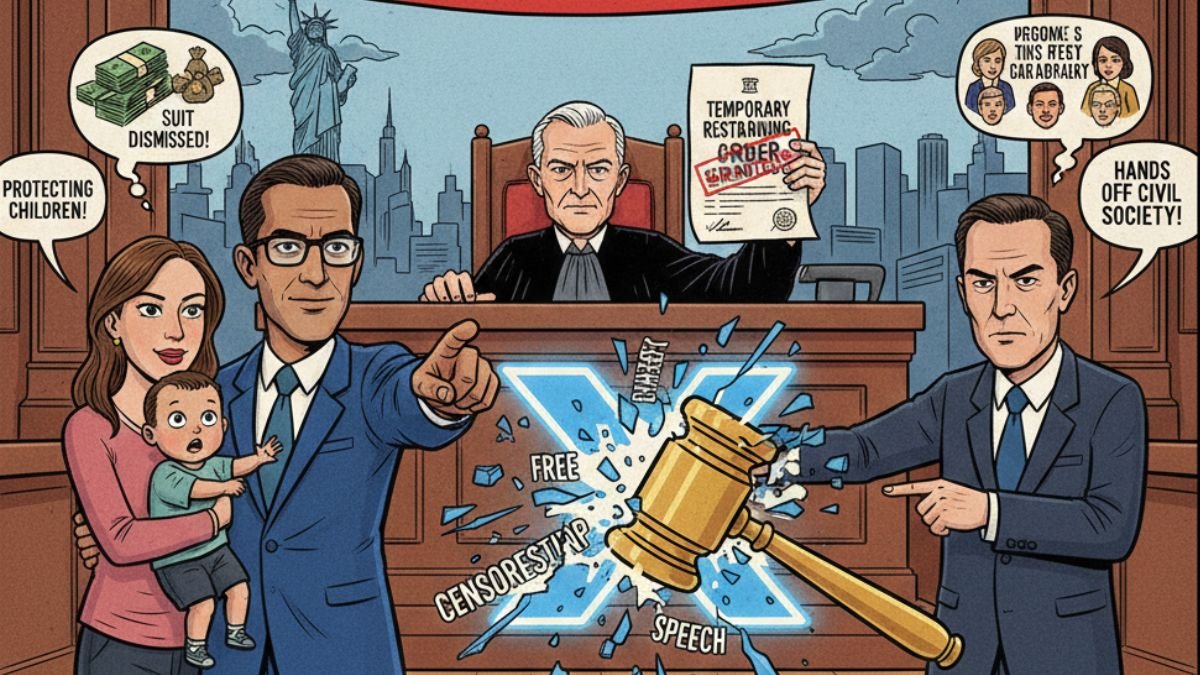
New York, NY – It was a race against time that threatened to upend a life built on American soil. For a moment, Imran Ahmed faced the very real prospect of being torn away from his American wife and young child, his residency revoked in a sweeping move by the new administration. But on Thursday, a federal judge intervened, hitting the pause button on a deportation order that Ahmed claims is nothing short of political retaliation.
The drama unfolded in a Manhattan courtroom where US District Judge Vernon S. Broderick granted a temporary restraining order, effectively blocking federal officials from detaining Ahmed without a proper hearing. The decision offers a fleeting but critical breath of air for the Center for Countering Digital Hate (CCDH) founder, who found himself in the crosshairs of a fiery debate over free speech and online censorship.
At the heart of the conflict is a stark accusation from Washington. Secretary of State Marco Rubio has alleged that Ahmed, along with four others, orchestrated efforts to strong-arm technology platforms into suppressing American viewpoints they opposed. To the administration, Ahmed isn’t just a campaigner; he is part of a mechanism seeking to coerce censorship.
Ahmed, a permanent US resident, paints a very different picture. He argues that his work is about protecting children and stemming the tide of antisemitism online. In his view, the revocation of his visa wasn’t a matter of national security, but a targeted attempt to silence a critic. He warned that the government’s move was a direct threat to his family unit, a sentiment that clearly resonated in his legal filing against Rubio and Attorney General Pamela Bondi.
This legal skirmish is the latest flashpoint in a broader war over the definition of free speech in the digital age. The administration’s aggressive stance signals a new era where international monitoring groups may face steep hurdles in operating within the United States if their work is perceived as curbing domestic discourse.
The backdrop to this visa revocation is heavy with history. In 2023, Ahmed’s organization was sued by Elon Musk’s X (formerly Twitter) after the CCDH reported a spike in hate speech following Musk’s takeover. While a federal judge dismissed that lawsuit, the animosity remains palpable. The current administration’s move to block Ahmed echoes the sentiments of that previous legal battle, suggesting a coordinated pushback against entities that monitor social media platforms. The backlash has already crossed the Atlantic, with European leaders voicing sharp criticism of the US decision to target civil society figures.
The federal government can’t deport a green card holder like Imran Ahmed, with a wife and young child who are American, simply because it doesn’t like what he has to say. – Roberta Kaplan, Ahmed’s Attorney
Kaplan’s statement cuts to the core of the legal defense: the protection of First Amendment rights for residents, regardless of the administration’s stance on their viewpoints. She highlighted the speed of Judge Broderick’s decision as a telling indicator of the case’s merit.
I will not be bullied away from my life’s work of fighting to keep children safe from social media’s harm and stopping antisemitism online. – Imran Ahmed
Ahmed’s defiance frames the narrative not as a bureaucratic immigration issue, but as a moral stand. He is positioning himself as a defender of the vulnerable, refusing to yield to what he characterizes as intimidation tactics.
For now, Imran Ahmed remains in the United States, his detention blocked and his immediate future secured by a judge’s pen. However, this is merely the opening quarter of a high-stakes contest. With the State Department maintaining that the US has no obligation to allow foreign nationals to reside within its borders, the administration is unlikely to back down easily. As the appeal in the Musk case looms and this visa battle heads toward a full hearing, the intersection of immigration policy and digital free speech is set for a defining showdown.