A Masterpiece Divided by Definition

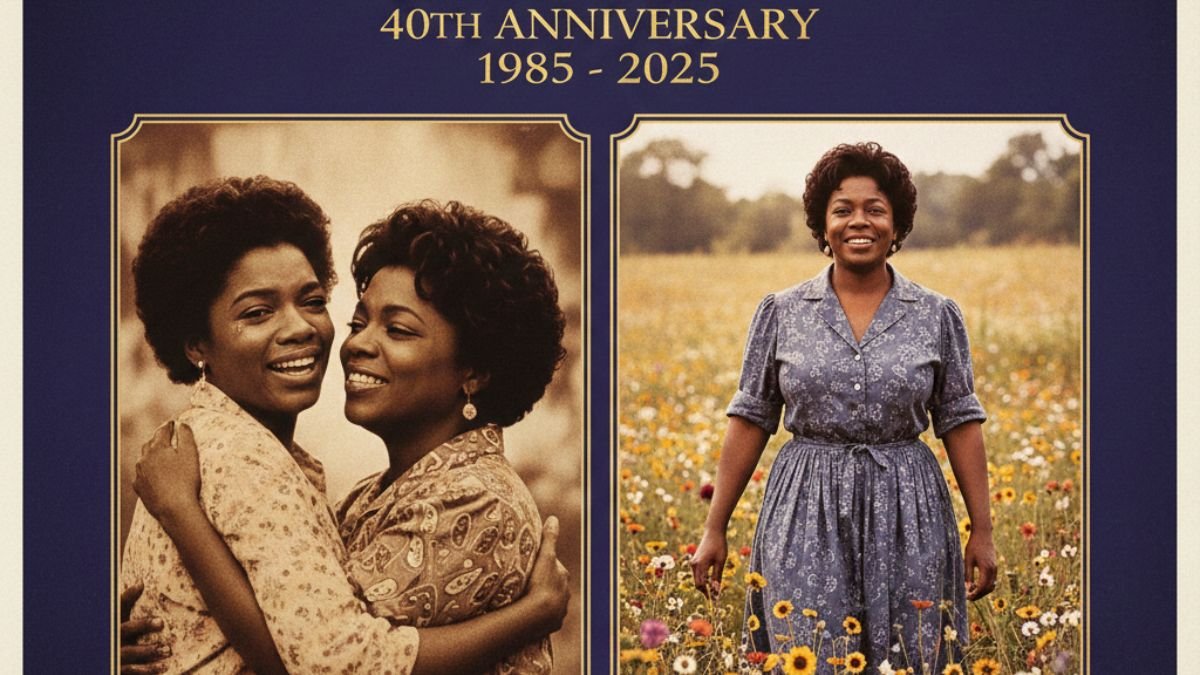
LOS ANGELES, Dec. 26 – It has been four decades since Celie first spoke to God on the big screen, transforming Alice Walker’s Pulitzer Prize-winning prose into cinematic history. When The Color Purple premiered on December 18, 1985, it offered a visceral look at trauma and triumph in rural Georgia, launching the careers of Whoopi Goldberg and Oprah Winfrey. But as the film marks its 40th anniversary, the applause is still accompanied by a lingering, complex question that divides critics and fans alike: Who truly owns the soul of this story?
The film is undeniably a monumental achievement in cinema, having garnered 11 Academy Award nominations and cemented its place in the cultural zeitgeist. However, the machinery behind the lens has fueled a forty-year debate. Critics like Lawrence Ware argue that despite the Black talent on screen, the film cannot claim the title of a “Black film” because the ultimate storytellers director Steven Spielberg and screenwriter Menno Meyjes were white men.
This disconnect was tangible in the adaptation process. Spielberg, prioritizing marketability, notably softened the romantic relationship between Celie and Shug Avery, a crucial element of Walker’s novel. For skeptics, this decision exemplifies the limitations of a narrative filtered through a lens outside the community it depicts. The argument posits that true ownership requires power behind the camera, not just presence in front of it.
Yet, to dismiss the film solely on its director’s demographics is to ignore the fierce agency of the Black artists who willed it into existence. Countering the skeptics, writer Angela Johnson argues that the film’s spirit is undeniably Black, anchored by the influence of producer Quincy Jones and the watchful eye of Alice Walker. Walker, initially hesitant to sell the rights, eventually made peace with the collaboration, noting that “art is deeper than race.”
The actors themselves became the guardians of authenticity. Whoopi Goldberg famously stood toe-to-toe with Spielberg, correcting his vision of how a Black woman ages insisting on a change in gait and posture rather than wrinkles and makeup. The cast treated the script as a living document, infusing the dialogue with a cultural cadence that a screenplay alone couldn’t capture. The result was a hybrid creation: a Hollywood production guided by a Black spiritual compass.
“If a Black director wanted to do the movie… they had the opportunity. If people are pissed off that he did it, they should have stepped up.” – Whoopi Goldberg
Goldberg’s defense of Spielberg highlights the pragmatic reality of 1980s Hollywood. Her stance suggests that while the vessel may have been imperfect, the opportunity to bring Walker’s characters to a global audience was a necessary victory.
Forty years later, The Color Purple remains a complicated artifact. It exists in a unique space between Hollywood compromise and cultural milestone, serving as a testament to a time when Black stories were fighting for air. Whether one views it as a “Black film” or a film featuring Black people, its ability to spark this debate four decades later proves its enduring power. It remains not just a movie to be watched, but a text to be wrestled with.