The Cost of a Tweet: Analyzing Lady Gaga’s High-Stakes Bangkok Collision

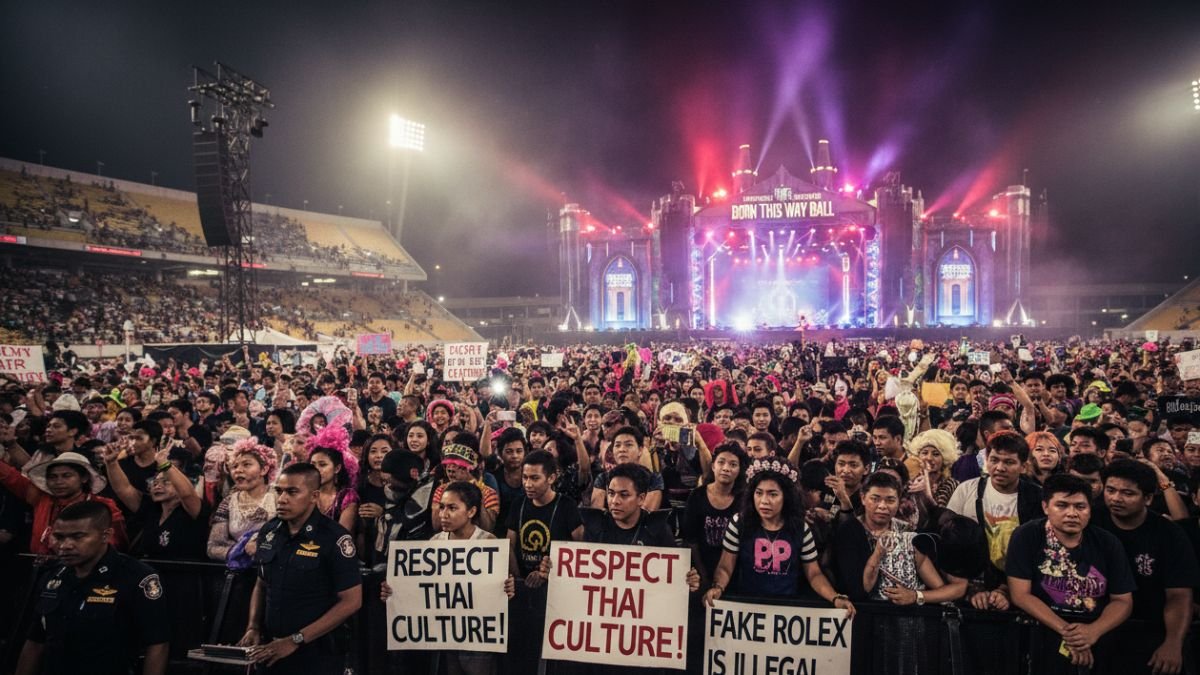
BANGKOK, THAILAND — In the high-stakes arena of global stadium tours, a single unforced error can shift the momentum faster than a turnover in the red zone. While Lady Gaga’s initial arrival tweet radiated the standard “stadium-filler” energy, it set the stage for one of the most significant cultural PR fumbles in modern music history. For fans and analysts looking back, it remains a case study in how “brand voice” can collide violently with local reality.
The Playbook Gone Wrong
The “Born This Way Ball” was a logistical juggernaut, a massive operation moving across Asia with the precision of a professional sports franchise. But the strategy hit a wall the moment Gaga touched down. Shortly after her arrival in Bangkok, she followed up her excitement with a comment about wanting to buy a “fake Rolex” in a local market. The reaction from the Thai Ministry of Culture was swift—not a slap on the wrist, but a formal complaint that threatened the very standing of the performance at Rajamangala National Stadium.
From a tactical standpoint, the blunder ignored the “Scout Team” basics. In Thailand, intellectual property and the public image of their markets are sensitive subjects. The fallout wasn’t just noise on social media; it resulted in:
- Government Intervention: Formal complaints filed regarding “cultural disrespect.”
- Security Escalation: Increased police presence at the venue to manage protestors from religious and nationalist groups.
- Brand Dilution: A sudden pivot from a message of empowerment to a defensive PR stance that lasted the duration of the Southeast Asian leg.
Despite the noise, the numbers didn’t lie. Gaga still pulled a massive crowd of over **50,000 fans**, proving that even when the PR department is in “prevent defense,” the star power of a franchise player can still carry the day. However, the incident forced a complete rewrite of the “Cultural Sensitivity” manual for every major tour that followed in the region.
Inside the Huddle
“You can have the best stage, the best lighting, and the best songs, but if you don’t understand the turf you’re playing on, you’re going to get hit. That trip wasn’t about the music—it became a lesson in international relations 101.” — Elena Rossi, Former International Tour Coordinator
The Bottom Line & What’s Next
Looking back from 2025, this moment stands as the precursor to the ultra-managed social media presence we see from stars like Taylor Swift or Beyoncé today. The “off-the-cuff” era died in Bangkok. Today, tour logistics teams employ local cultural consultants to vet every post before it hits the feed. If you want to play the big rooms in Asia or the Middle East, you have to play by their rules. The “fake Rolex” tweet remains the ultimate cautionary tale: in the world of global entertainment, your greatest strength—your direct line to the fans—is also your biggest vulnerability. Expect more artists to stick to the script as the financial penalties for “going rogue” continue to climb.