Why Potter New Crossover May Require a Time-Turner

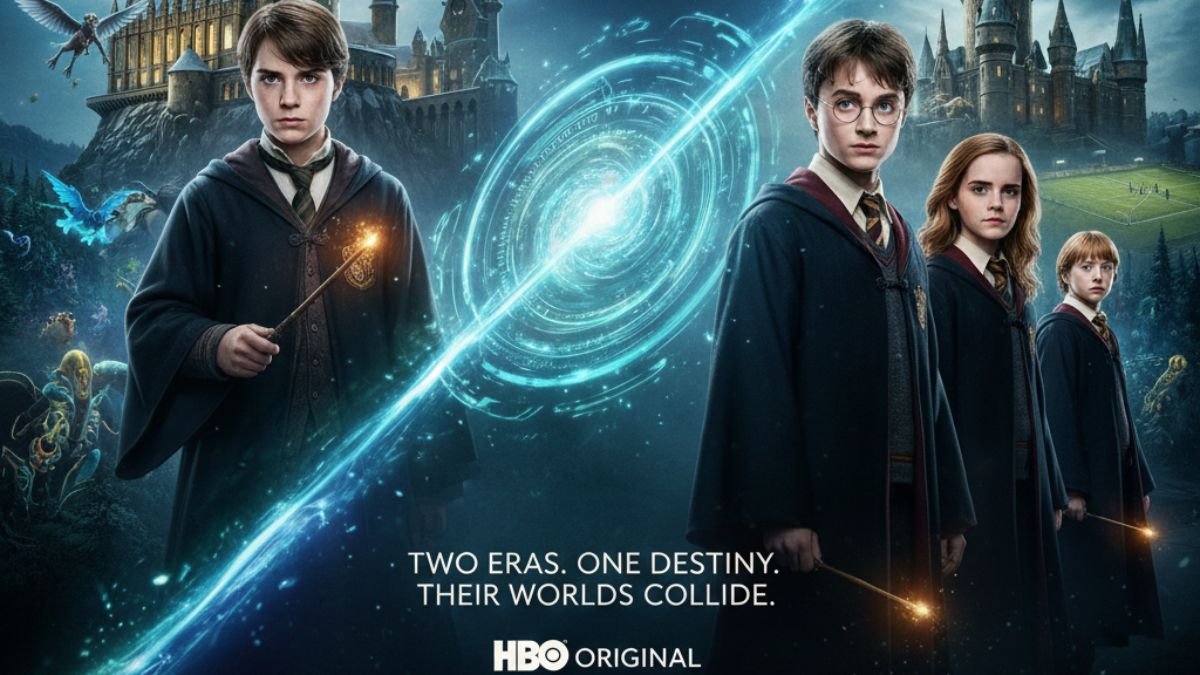
London, Dec 26 – Warner Bros. has confirmed a narrative collision that few saw coming: the upcoming HBO Harry Potter television series will officially cross paths with the sequel to the blockbuster video game Hogwarts Legacy. It is a bold strategic move designed to unite two massive pillars of the Wizarding World, set to premiere around 2027. But beneath the excitement of a shared universe lies a glaring chronological problem that has fans and lore-keepers scrambling for answers: the two stories are separated by nearly 100 years.
The ambition is undeniable. The HBO series, a faithful reboot of J.K. Rowling’s 1990s-set novels, aims to reset the canon. Meanwhile, the Hogwarts Legacy franchise has staked its claim in the late 1890s, offering players a glimpse of the wizarding world long before Harry, Ron, or Hermione were born.
Bringing these two distinct eras together creates a logistical nightmare. A direct cameo is impossible without defying the laws of aging, and a simple “descendant” storyline risks feeling trivial. This narrative friction suggests that Warner Bros. may be preparing to deploy the franchise’s most volatile plot device: time travel. If characters from the 1890s are to impact the 1990s—or vice versa—in a meaningful way, the writers may have no choice but to dust off the Time-Turners.
This crossover represents a high-stakes gamble on the “rules” of magic. Integrating time travel requires choosing a lane between two contradictory canonical precedents. The Prisoner of Azkaban established a “closed loop” theory, where traveling to the past merely fulfills events that always happened—essentially fate. However, the stage play Harry Potter and the Cursed Child introduced a more chaotic model, where meddling with the past creates alternate, often darker, timelines.
If the showrunners opt for the Cursed Child approach, the crossover could have massive, universe-altering stakes. If they avoid time travel entirely, they are left with Pensieves and flashbacks—safe, but arguably less “rewarding” for an audience promised a true collision of worlds.
“The games team has been coordinating some of the big-picture storytelling elements in the ‘Hogwarts Legacy’ sequel with the storylines that will play out in the ‘Harry Potter’ HBO series.” – David Haddad, Warner Bros. Interactive President
Haddad’s confirmation signals that this is more than just an Easter egg hunt; it is a concerted effort to build a transmedia universe. The coordination implies that events in the game won’t just reflect the show, but actively feed into it, suggesting the gaming narrative might hold the key to unlocking mysteries in the television adaptation.
Warner Bros. is attempting to weave a century of lore into a single cohesive tapestry, a feat that will require more than just magic—it will require narrative discipline. Whether they utilize the dangerous mechanics of Time-Turners or the passive observation of Pensieves, the success of this crossover will depend on whether they can bridge the generational gap without breaking the timeline. For now, the Time-Turner is spinning, and fans are waiting to see where—and when—it stops.