Whistle-Blown: How an Officiating Blunder Robbed the Jaguars of a Game-Changing TD

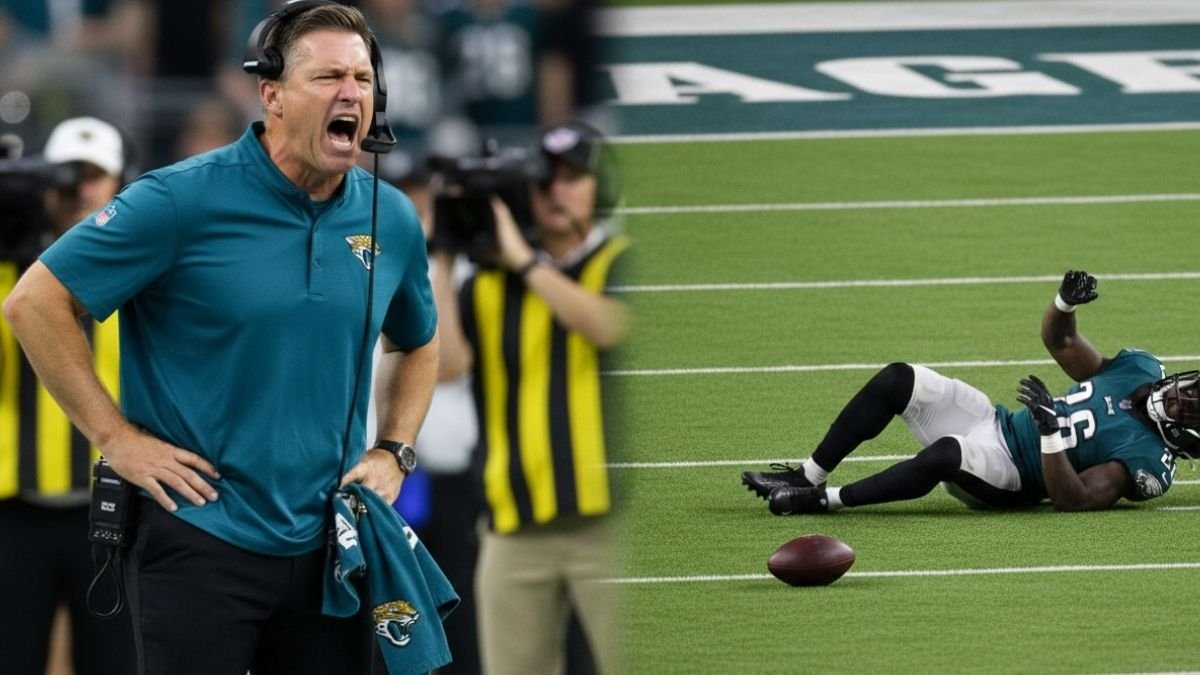
The play seemed straightforward: Eagles running back Saquon Barkley lost his footing and went to the ground. As he attempted to get back up, the ball slipped from his grasp. Jaguars defenders swarmed, scooped the ball, and raced into the end zone. The only problem? The referees had already killed the play, incorrectly assuming Barkley had been touched while down.
The “Down by Contact” Ghost
Replays immediately confirmed the Jaguars’ worst fears. Barkley was in a “no-man’s land” on the turf, with the nearest defender several yards away when he fell. Under NFL rules, a player must be touched by an opponent to be ruled down. Because the whistle blew before the recovery, the play was non-reviewable in terms of the touchdown return.
This 14-point swing—negating a Jacksonville score and allowing Philadelphia to keep the ball—completely shifted the momentum of the contest. Instead of the Jaguars taking a lead, the Eagles were able to reset and maintain their offensive rhythm.
“It’s frustrating. We see it on the big screen, everyone in the stadium sees he wasn’t touched, but the whistle is final. You can’t get those points back.”
— Anonymous Jaguars Player post-game
A Pattern of Frustration
The Jaguars’ sideline was livid, with head coach Doug Pederson seen in an animated exchange with the head linesman. While the Eagles’ talent is undeniable—Barkley finished with another 100-plus yard performance—the victory will forever be shadowed by the “what if” of the second quarter.
Critics of the current officiating system argue that this is a prime example of why the “down by contact” rule should be more strictly monitored or made more easily reversible. In a game of inches, a 70-yard defensive return being wiped off the board by a phantom touch is a tough pill for any franchise to swallow.
Standings Impact
For the Eagles, the win moves them closer to the top of the NFC East. For Jacksonville, the loss is a devastating blow to their slim playoff hopes. As the NFL moves toward the postseason, the pressure on officiating crews to avoid “anticipatory whistles” has never been higher. This Week 9 blunder will likely be a primary case study for the league’s officiating department on Tuesday morning.