Silent Night, Steady Yields: Markets drift into holiday mode amid robust growth signals

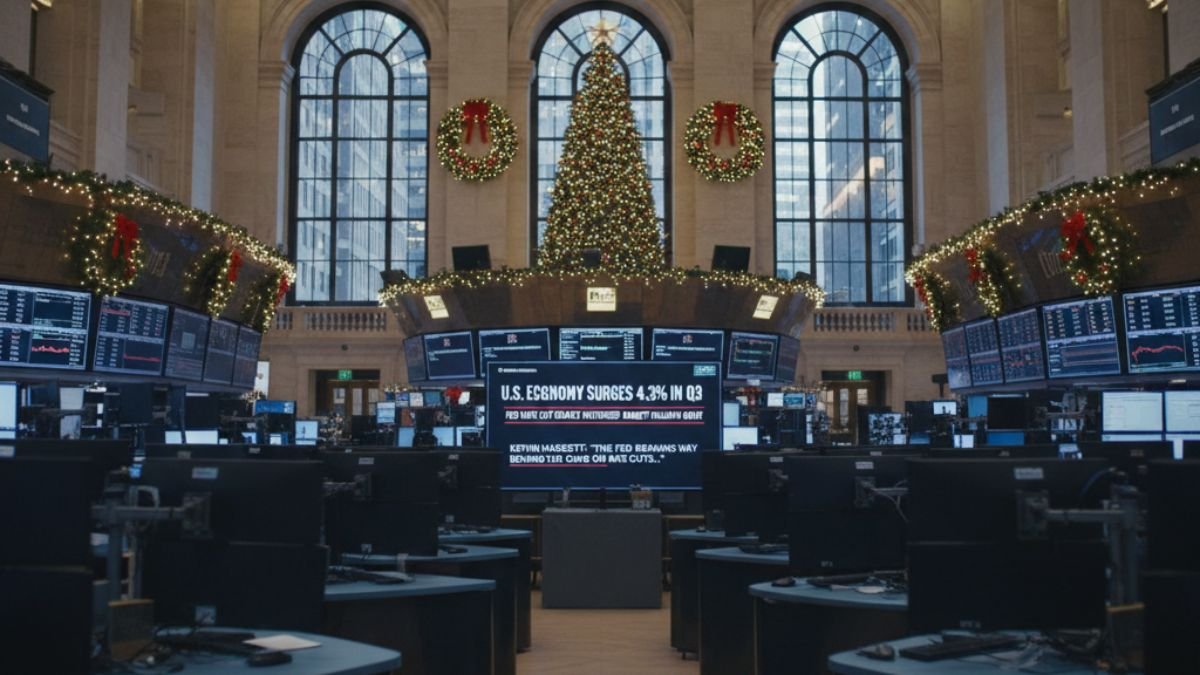
New York, December 24 – Wall Street is quieting down for the holidays, but the economic data refuses to take a break. On a shortened trading Wednesday, U.S. Treasury yields drifted slightly lower, offering a moment of calm before the markets shutter for Christmas. Yet, beneath the low volume and festive atmosphere, a surprisingly strong GDP report has ignited fresh debates about the Federal Reserve’s next move.
Action in the bond market was muted as traders looked toward the exits. The benchmark 10-year Treasury yield dipped by a single basis point to 4.159%, reflecting a market in holding patterns rather than active discovery. Shorter-term notes followed suit, with the 2-year yield holding steady at 3.528%, while the 30-year bond remained largely unchanged.
The quiet price action belied the significance of the morning’s data dump. The Commerce Department released delayed figures showing the U.S. economy surged by 4.3% in the third quarter—the fastest pace recorded in two years. In a normal session, such explosive growth might have sent yields spiking as traders priced in higher inflation risks. Instead, the reaction was tempered, likely dampened by the early 2:00 p.m. market close and the thin liquidity characteristic of Christmas Eve.
The robust growth figures have complicated the narrative for the Federal Reserve. A booming economy typically argues against aggressive interest rate cuts, but the political pressure to ease policy is mounting. The divide is becoming increasingly public, creating a tug-of-war between incoming administration figures and current Fed officials.
On one side stands the White House’s economic team. Kevin Hassett, Director of the National Economic Council and a frontrunner to potentially succeed Jerome Powell, has openly criticized the central bank’s pace. He argues that compared to global peers, the U.S. is lagging in providing relief to borrowers. On the other side, regional Fed presidents like Cleveland’s Beth Hammack are urging caution, suggesting that inflation remains a bigger threat than a cooling labor market. The market is now caught in the middle, with investors betting the Fed will sit on its hands until April before cutting rates again.
“The Fed remains way behind the curve on rate cuts compared with other countries’ central banks.” – Kevin Hassett, National Economic Council Director
Hassett’s comments are more than just critique; they signal a potential shift in philosophy for the future of the Fed. His stance suggests that if leadership changes next year, the central bank could pivot toward a much more aggressive pro-growth strategy, prioritizing rate cuts even in the face of strong economic data.
As trading desks empty out for the holiday, the bond market is left with a complex New Year’s resolution: reconciling a hot economy with a cooling inflation outlook. Investors may be enjoying the silence of a shortened week, but with the Fed’s path becoming murkier by the day, the volatility is likely just taking a long winter’s nap.