Warren Buffett Redefines Retirement: The Oracle Steps Down, But Refuses to Leave the Building
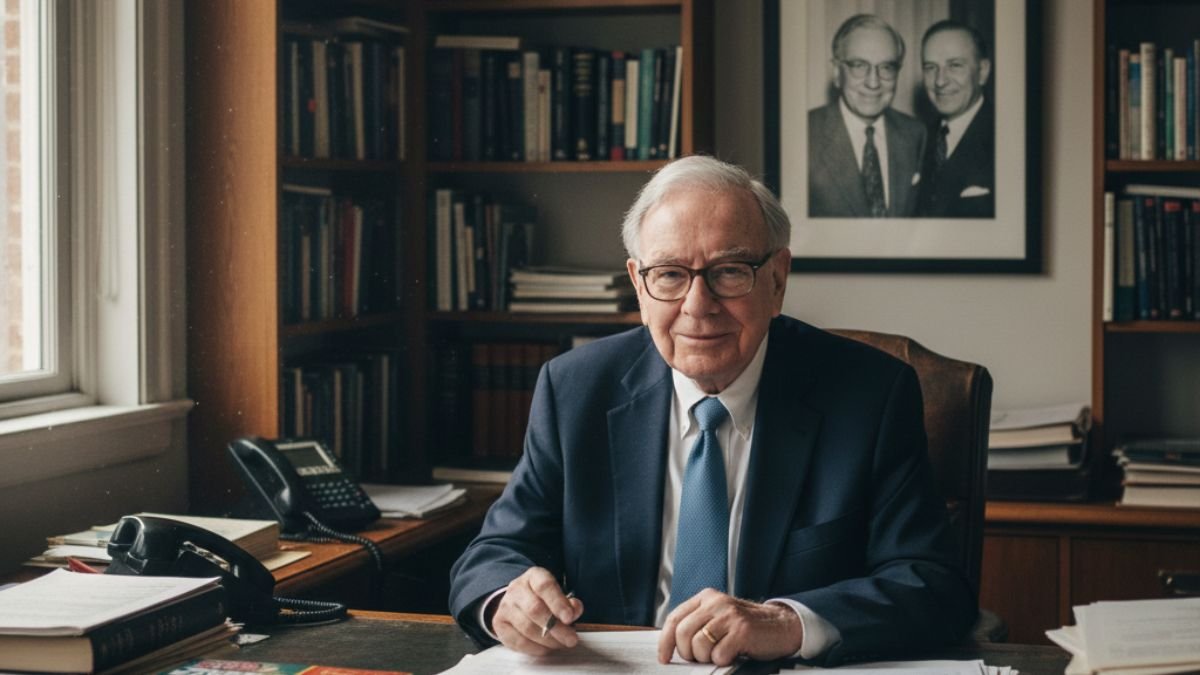
Omaha, Nebraska, December 24 – At 95 years old, most titans of industry have long since retreated to private islands or quiet studies. Warren Buffett, however, is not most people. While the “Oracle of Omaha” is mere days away from formally relinquishing his title as CEO of Berkshire Hathaway, he has made one thing abundantly clear to his shareholders and the world: he isn’t going anywhere. The man who famously “tap dances to work” is skipping retirement entirely to remain as chairman, ensuring the heartbeat of the conglomerate keeps its steady rhythm.
The transition of power to successor Greg Abel marks the administrative end of an era, yet for Buffett, it appears to be merely a change in stationery rather than lifestyle. He has explicitly rejected the traditional trappings of retirement, telling The Wall Street Journal that he has no intention of “sitting at home and watching soap operas.” Instead, he remains a fixture at Berkshire’s Omaha headquarters, clocking in five days a week, driven by the hope that he “could conceivably be useful” or stumble upon that next great idea.
To understand why a nonagenarian refuses to rest, one must look at the empire he built. Since taking control in 1965, Buffett transformed a failing textile mill into a global economic force, acquiring giants like Geico and holding massive stakes in Coca-Cola and Apple. For him, this wasn’t just asset allocation; it was art. He has famously described his role as “painting his own painting,” a creative freedom that allows him to work alongside people he trusts. To stop now would be to put down the brush while he still sees color on the canvas.
Buffett’s decision is rooted in a deep, almost romantic attachment to his work. In his Thanksgiving letter, he reiterated that his interests remain unchanged. The joy of capital allocation investing both inside and outside the company is what he considers the “most enjoyable thing to do in the world.”
This isn’t a sudden clinging to power; it is the continuation of a philosophy he has held for decades. He views the ability to work with people he admires as the “best job in the world,” a sentiment he shared frequently with his late partner, Charlie Munger. For Buffett, the office isn’t a place of obligation, but a sanctuary of intellectual curiosity.
“About five to 10 years after I die.” – Warren Buffett
This was Buffett’s witty response to a student years ago who asked when he planned to retire. It encapsulates his lifelong dedication to the company he calls his “first love,” underscoring that his commitment to Berkshire Hathaway transcends typical career timelines.
For decades, Buffett has held the view that retirement is “unthinkable,” once joking to shareholders that it would be worse than death itself. As he finally hands the operational reins to Greg Abel, the investing world can take comfort in knowing that while the titles are changing, the spirit of Berkshire remains firmly in the building. Buffett may no longer be the CEO, but he is still the chairman, and more importantly, he is still painting.